
It’s easy to pour all your energy into the product that embodies your innovation, while the business model that should carry it forward remains undefined. In this article, we look at how to design both together from the start, creating a complete system that can spot gaps early, answer tough questions before they’re asked, and set the foundations for growth.

Why Startups Fail Despite Great Ideas
Innovation is often celebrated as the act of creating something new: a product, a service, a breakthrough. Yet many early-stage ventures, even with strong concepts, still struggle to gain traction. The missing piece is rarely the idea itself, but the system that must exist around it: one that holds together and works under real conditions.
Too often, the product becomes the business. Teams invest in what they are building, but overlook how it will move through the world: how it will earn trust, deliver value, scale, and adapt. When questions come from investors, partners, or even regulators, the model begins to wobble. Gaps show. Answers fall short.
This fragility stems from treating the business model as secondary instead of integral to design. When the structure cannot hold, even great ideas collapse under their own weight.
Mapping Business Complexity Before You Build
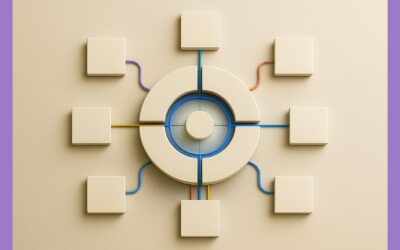
The Ten Types of Innovation™ (TTI), developed by Larry Keeley and the Doblin team, is often presented as a tool for creative ideation. It breaks innovation into ten dimensions — from profit models and networks to service layers and customer engagement — helping teams think beyond product features.
But in my work with early-stage ventures, I use TTI differently: not as a menu of options, but as a map of the business itself. Each type represents a structural layer. By mapping them early, we shift from scattered creativity to deliberate architecture. We surface assumptions. We identify friction points. We begin designing a system; we are not just launching a product. We are creating a business from the ground up.
That is why I later developed the LDSH Innovation Lens: a slightly modified structure designed for the realities of MedTech. It adds layers to account for the complexity of the regulatory path and the commercial dynamics of healthcare systems, while keeping the clarity of TTI’s original logic.
With LDSH, founders can see how the pieces fit together from the outset. They can spot where ambition and business design might diverge, and they can prepare for the pressures that will come when investors, clinicians, or payers test their model. The result is a system that anticipates friction and builds resilience early, long before those weaknesses surface in the market.
How Structural Strength Creates Success
A business built from structure, not just intent, begins to behave differently. When external questions arrive, the system already holds the answer. Revenue logic supports the delivery model. Brand reflects real customer experience. Partners know where they fit, and why.
This coherence accelerates engagement. Investor conversations shift from probing gaps to exploring strategy. Partnerships form faster because integration has been designed from the outset. Even hiring improves: when candidates can see how the machine is built, they are more likely to join the journey.
Internally, it creates clarity. Decisions become easier, not because the path is simple, but because the structure is visible. Trade-offs happen earlier, with intention. Momentum is not mistaken for progress; the business grows with purpose and on purpose.
That is the shift the LDSH Innovation Lens is designed to bring. By making the full structure visible from the beginning, it gives founders a way to anchor decisions, pace growth, and build resilience before pressure tests arrive.
Lead with the Future in Mind: Answer Before the Question Is Asked
At its core, this is not just a method for innovation. It is a philosophy for how to build.
The LDSH Innovation Lens shifts the founder’s role from explaining to designing. The business holds together because choices link across the model, answers exist before questions arrive, and resilience is designed from the start.
That clarity changes how the company is seen, how it connects, and how it decides. Investors read coherence instead of risk, partners recognise where they belong, and teams act with confidence in the structure they are building.
When design carries the conviction, you no longer need to speak over doubt. You have already built something that stands on its own. In our next article, we will turn the lens the other way around: showing how the business you design begins to shape the product itself, and why alignment between the two is where lasting ventures are made.